

Create one source of truth
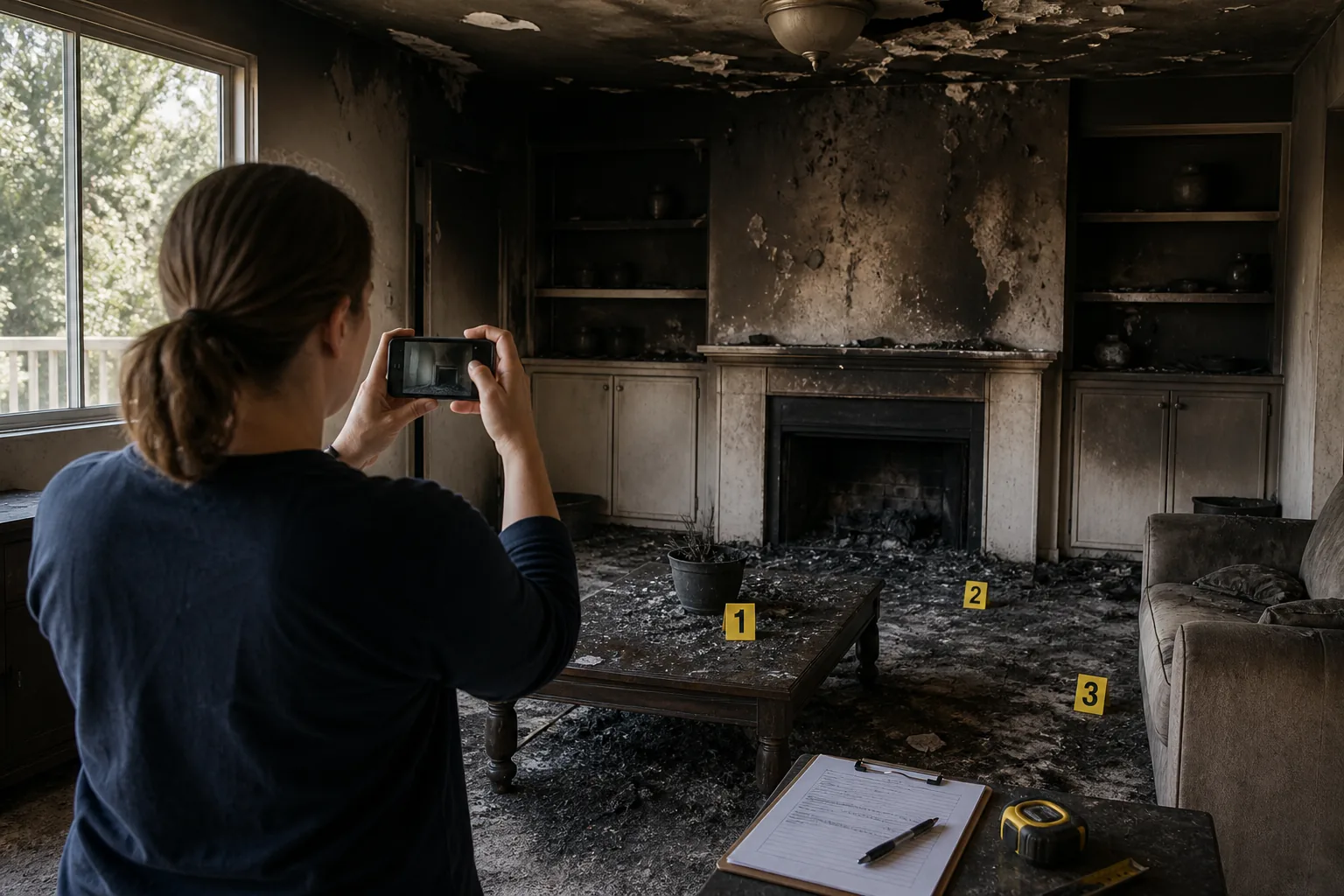
Use a notebook, spreadsheet, or shared folder. Record the date, person, organization, phone number, and result of every conversation. Save claim forms, letters, estimates, photographs, receipts, and the current policy documents together.
Name photo folders by room and date. Begin with wide views, then move to closer detail only where safe. Do not enter restricted areas to get a better picture.
- Claim and policy numbers
- Adjuster and contractor contacts
- Temporary-living receipts
- Property inventory
- Scopes and change documents
Describe what existed before the loss
For contents, record the item, room, approximate age, brand or model when known, and condition. Receipts, old family photos, online purchase histories, manuals, and credit-card records may help reconstruct an inventory.
Do not throw away damaged property until the insurer has given direction and it is safe to retain. When disposal is necessary for health or safety, document it carefully first.
Ask coverage questions, do not assume answers
Coverage, deductibles, additional living expenses, code upgrades, and valuation methods depend on the policy and the insurer's review. Ask what documentation is required, what deadlines apply, and how newly discovered damage should be reported.
- What does this payment cover?
- Is it an advance or final payment?
- How should additional damage be submitted?
- Who approves emergency work?
Sources and further help
This is general information. Follow instructions from firefighters, medical professionals, utilities, building officials, and your insurer.