

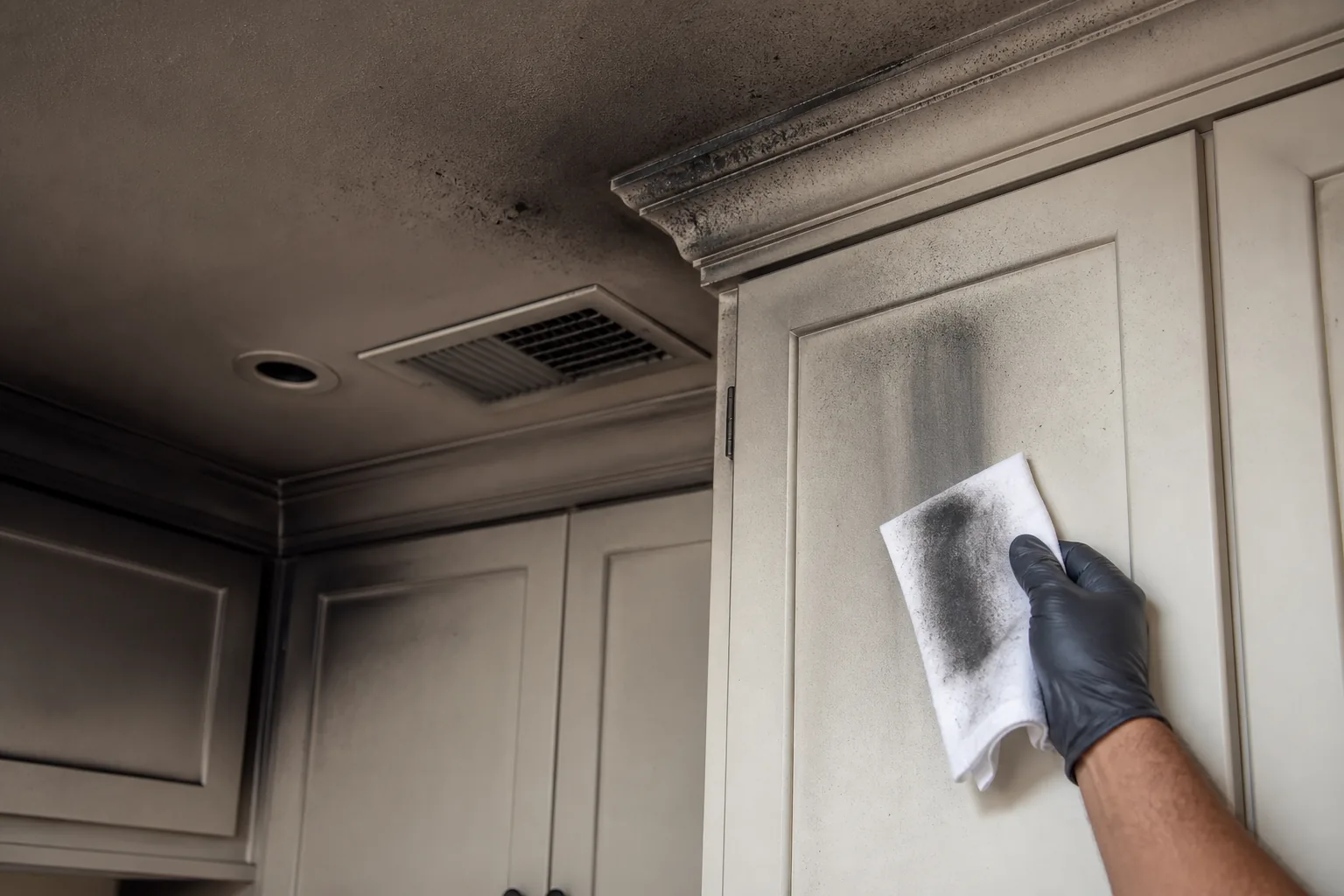
Smoke becomes residue
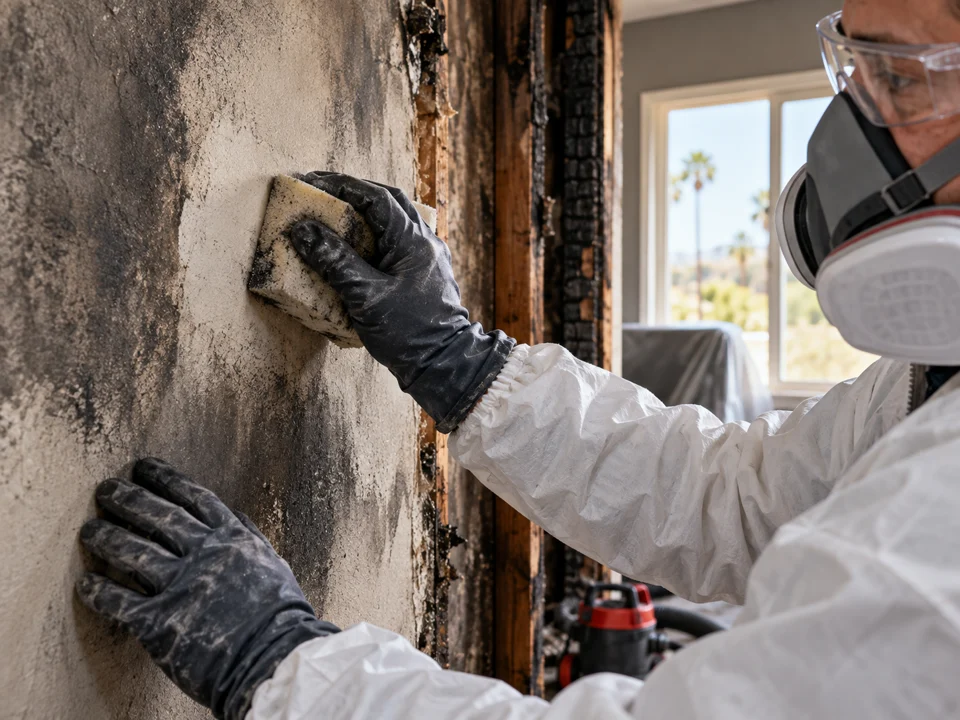
As smoke cools, particles settle on walls, ceilings, floors, metal, glass, fabrics, paper, and electronics. The residue depends on what burned, the temperature, airflow, moisture, and the distance from the fire.
A light film may still carry odor and fine particles. A dark mark may be oily, dry, acidic, or mixed with firefighting water. That is why one cleaning method does not fit every surface.
Early actions can spread the problem
Dry wiping can grind particles into a finish. Household cleaners can set stains or react with residues. Running an air handler may move soot into ducts and clean rooms. Enter only when authorized and ask whether the HVAC system should remain off.
Photograph rooms and contents before disturbing them. Separate clean and contaminated tools, gloves, and materials during any authorized work.
Cleaning and replacement are material decisions
Some hard surfaces may be cleaned. Porous or heat-damaged materials may require specialized treatment or replacement. Valuable photographs, books, textiles, and keepsakes may benefit from a conservator rather than ordinary cleaning.
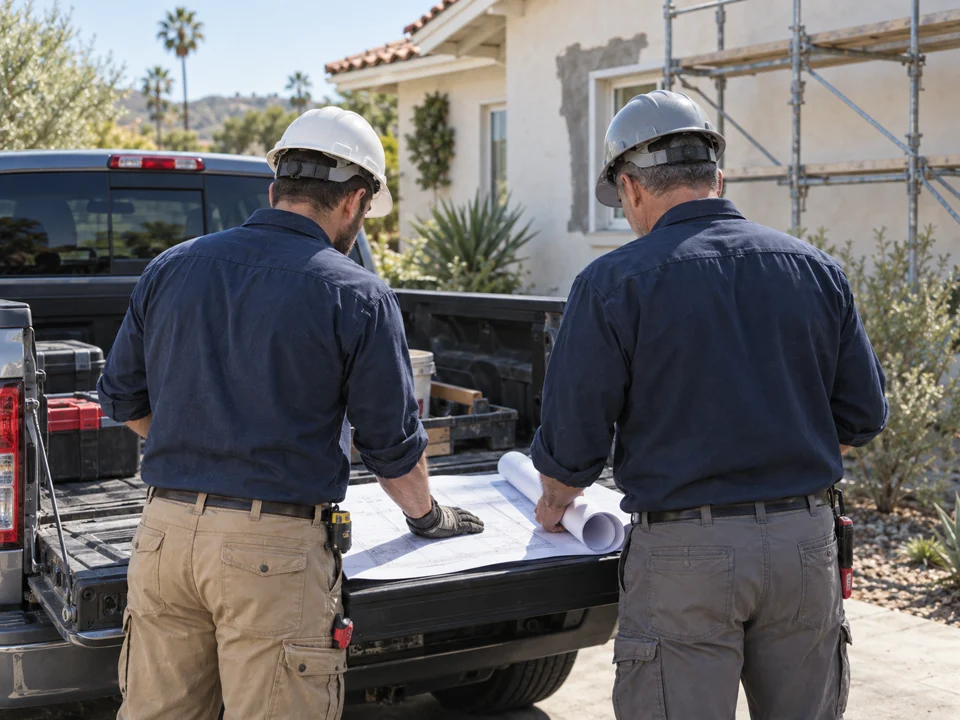
The right plan balances safety, material condition, sentimental value, cost, and the requirements of the insurer and property owner.
Sources and further help
This is general information. Follow instructions from firefighters, medical professionals, utilities, building officials, and your insurer.