Flame and heat change materials
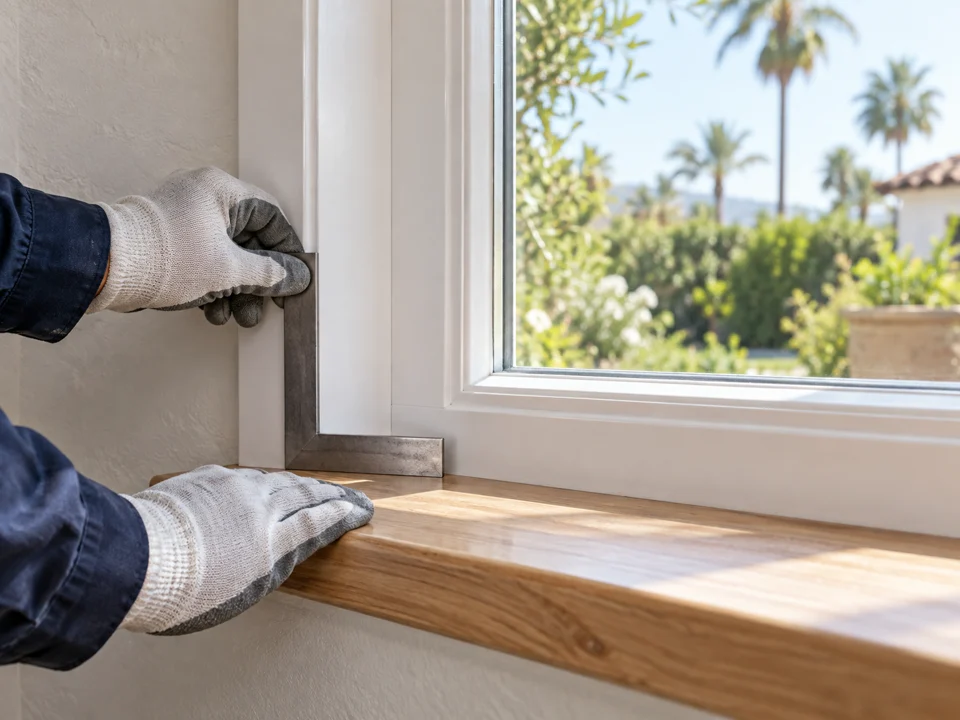
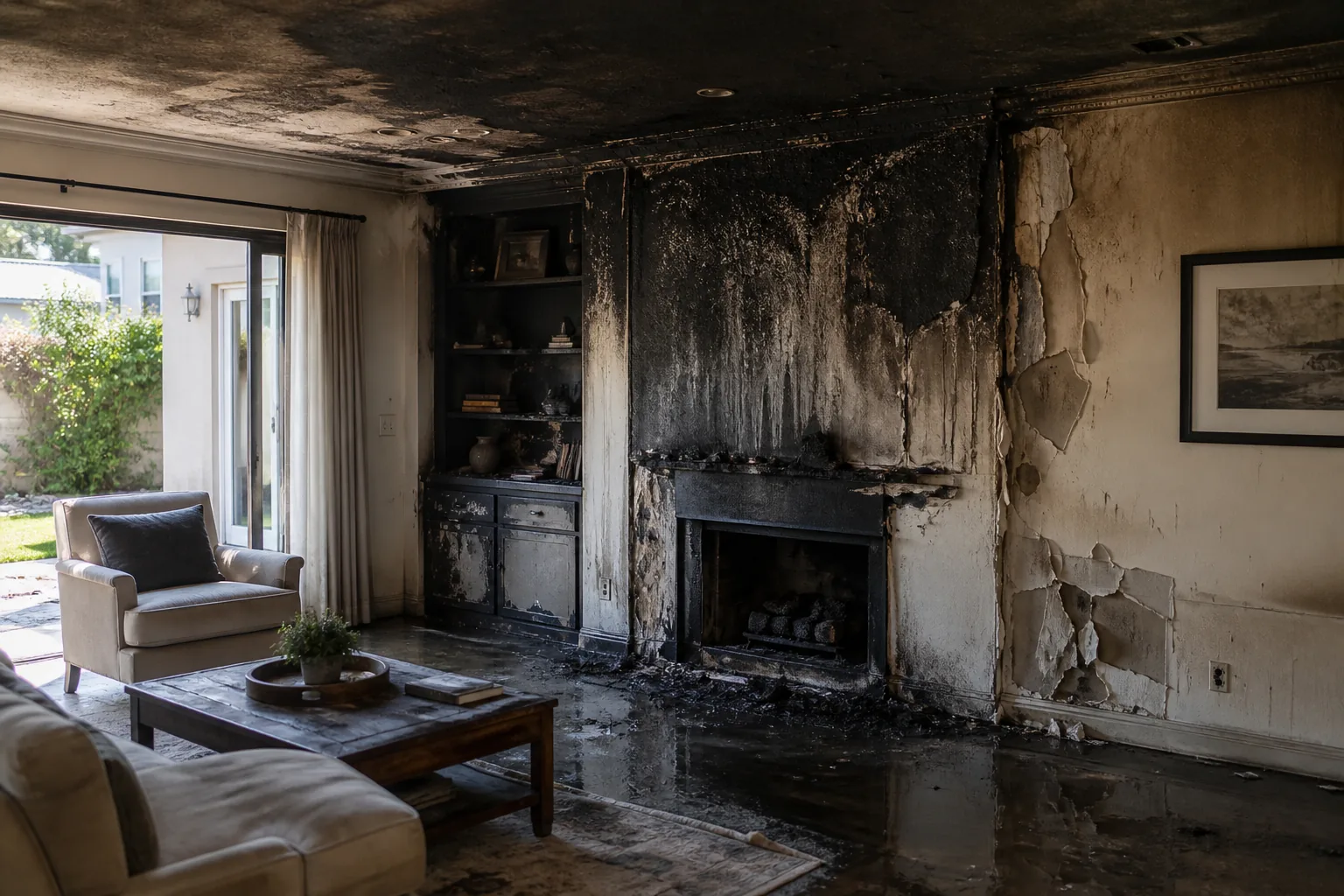
Open flame can consume contents, wall finishes, doors, cabinets, and framing. Heat can deform wiring, windows, plastics, appliances, fasteners, and finishes beyond the burn area. Some assemblies may need to be opened so damaged components can be evaluated.
A surface that looks intact is not automatically sound. Structural, electrical, and mechanical systems need qualified evaluation.
Smoke does not respect room boundaries
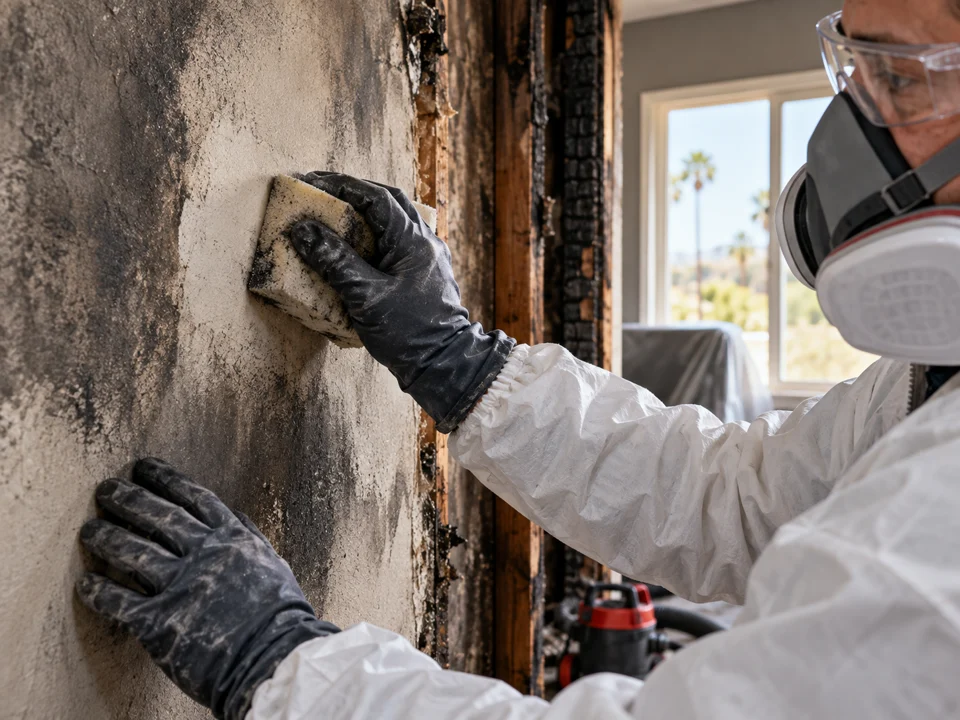
Smoke carries gases and particles through door gaps, ducts, stairwells, and pressure pathways. Soot may settle on ceilings, walls, contents, electronics, textiles, and inside cabinets. Different burned materials can leave different residues and odors.
Turning on HVAC equipment too early may spread contamination. Ask the appropriate professional when systems can be evaluated and operated.
Extinguishment changes the building too
Water can soak insulation, drywall, flooring, and contents. Firefighters may break windows, open roofs, or remove wall and ceiling areas to ventilate and find concealed fire. Recovery therefore begins with documentation and stabilization, then drying, cleaning, selective removal, and reconstruction based on actual conditions.
Sources and further help
This is general information. Follow instructions from firefighters, medical professionals, utilities, building officials, and your insurer.