
Water follows gravity and hidden pathways
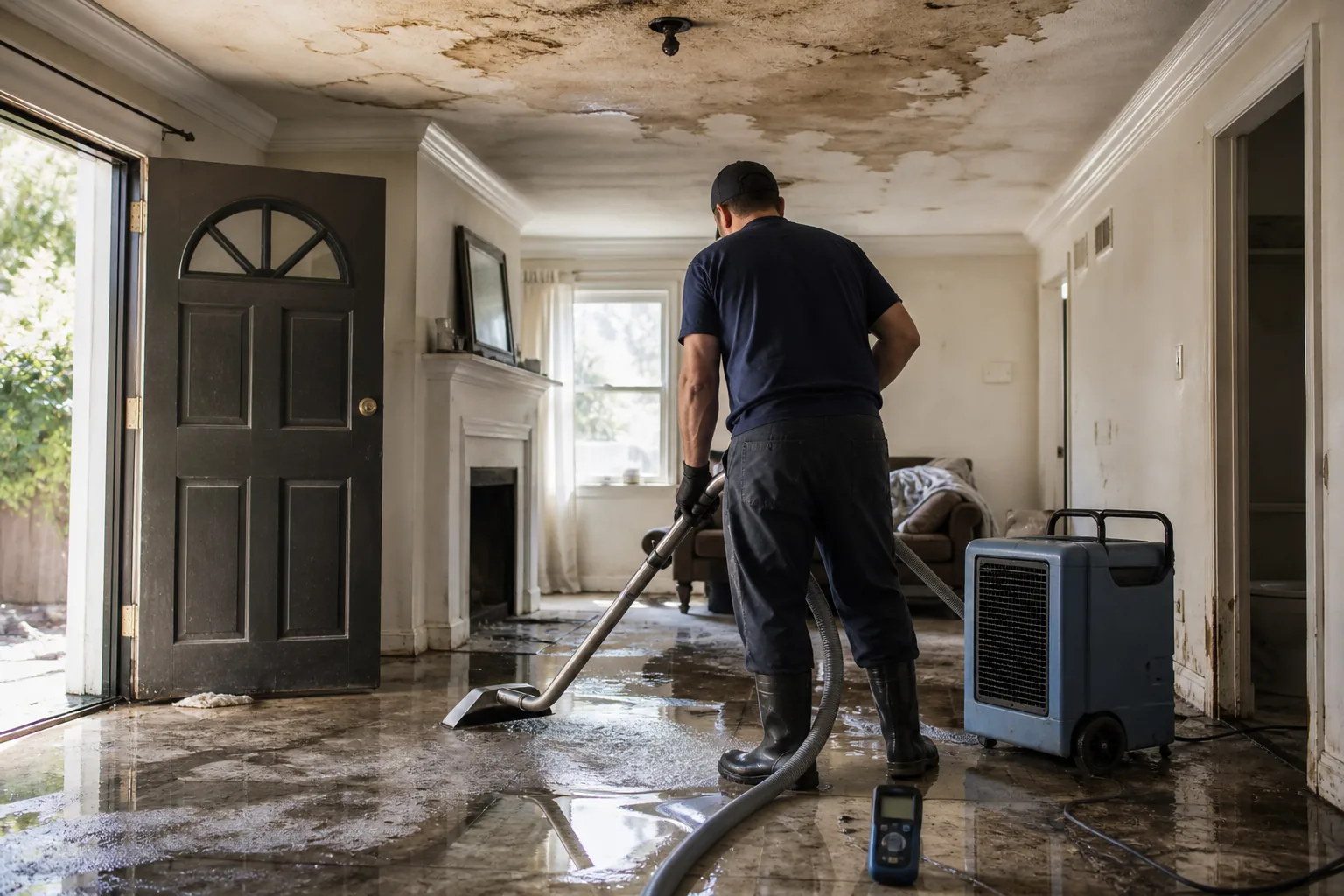
Hose streams and sprinkler discharge can move through wall cavities, floor openings, ducts, fixtures, and stairwells. In apartments, water may affect units below the fire. In houses, it may collect in insulation, subfloors, cabinets, and ceiling assemblies.
The visible puddle is not the whole moisture problem. Qualified teams use inspection and measurement to understand where water traveled.
Wet materials can become unstable
Drywall ceilings can sag under the weight of water. Floors and stairs may be weakened by fire, water, or both. Electrical systems may also be wet or heat damaged. Do not walk below bulging ceilings or restore power yourself.
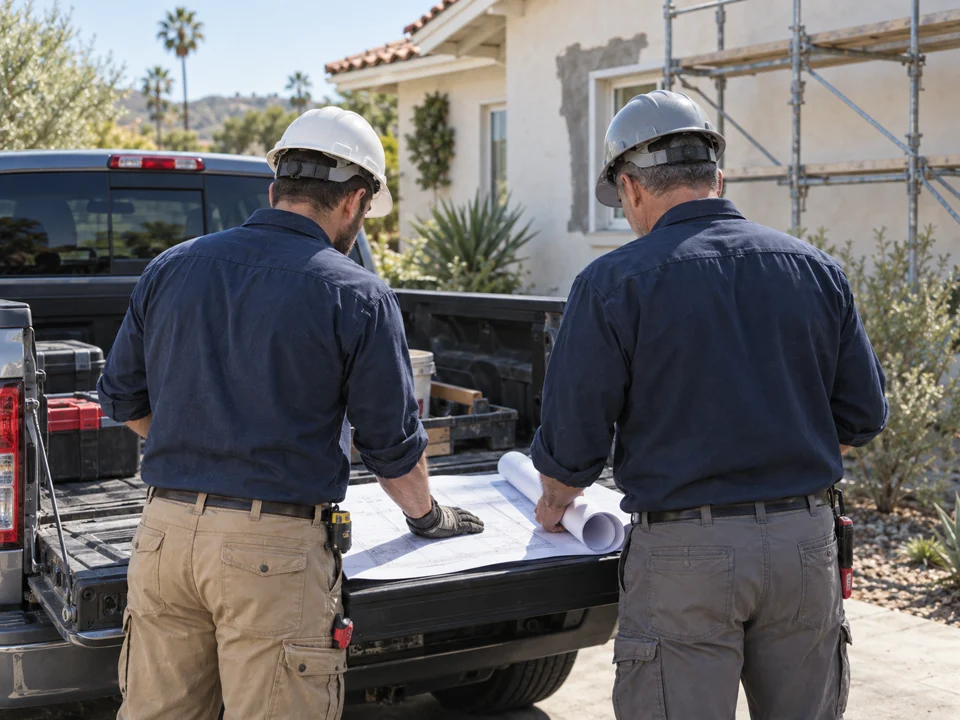
Fire officials and building professionals should control access before water extraction or demolition begins.
Drying has to connect to the fire scope
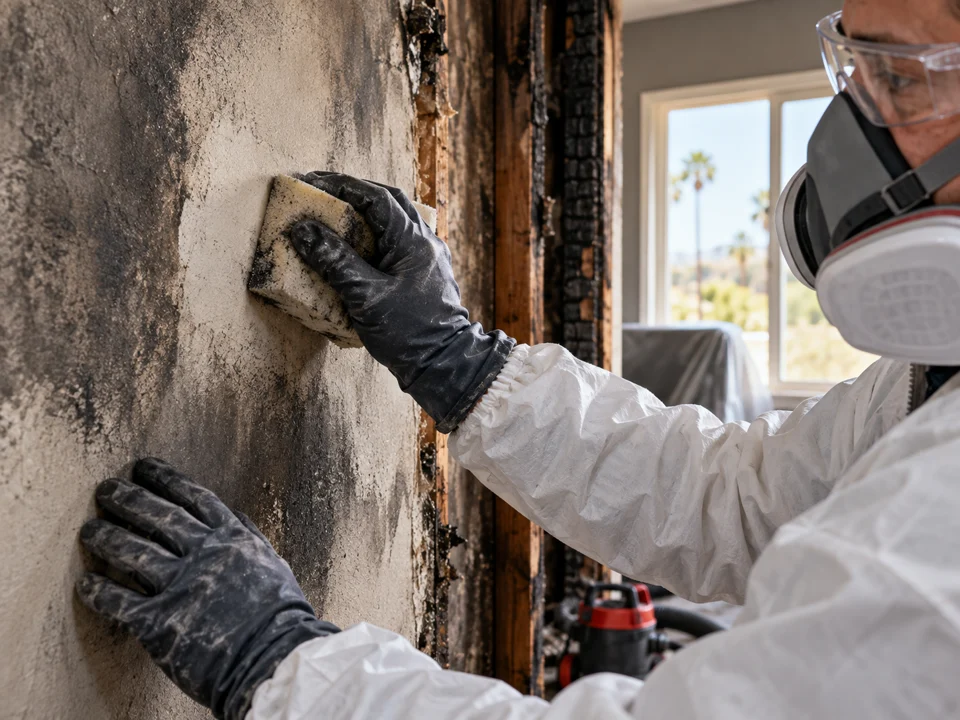
Water removal, controlled demolition, air movement, dehumidification, smoke cleaning, and structural evaluation are not separate stories. They must be coordinated so drying does not spread residue and reconstruction does not cover hidden damage.
Keep moisture readings, photographs, equipment records, and removal decisions with the same recovery file used for the fire claim.
Sources and further help
This is general information. Follow instructions from firefighters, medical professionals, utilities, building officials, and your insurer.